+91 7617005462



A kidney transplant for chronic kidney disease is a surgical procedure in which a healthy kidney from a living or deceased donor is implanted into a patient whose kidneys have permanently failed.
Kidney transplant for Chronic kidney disease (CKD) is the most effective treatment for patients with CKD stage 5 (end-stage renal disease). With diabetes and hypertension on the rise, CKD is becoming a major global health concern.
The National Kidney Foundation states that there are about 850 million people around the world with kidney disease, most of whom will require either dialysis or a transplant
Source: National Kidney Foundation
What Is CKD Stage 5? Definition and Symptoms
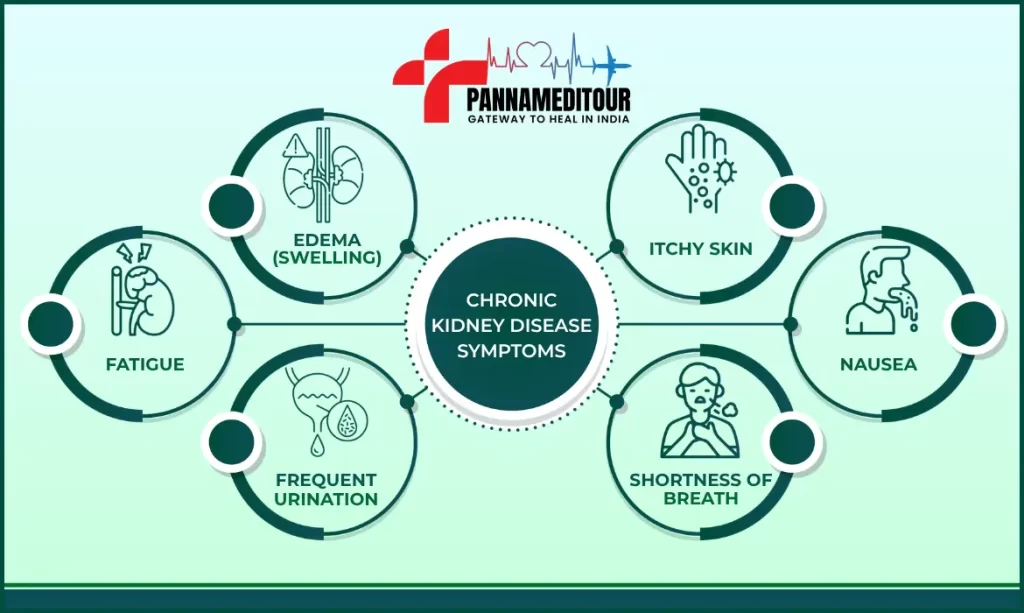
Stage 5 Chronic Kidney Disease (CKD stage 5) is characterised by a significant decline in function of the kidneys due to eGFR (estimated glomerular filtration rate) being less than or equal to (eGFR <15).
Key Characteristics:
- eGFR less than 15 ml/min
- Severe kidney injury
- Need for renal replacement therapy
Common Causes:
- Diabetes (account for~38% of renal failure)
- Hypertensive
- Glomerulonephritis
- Polycystic kidney disease
- Autoimmune diseases
Symptoms of CKD Stage 5:
- Severe fatigue
- Fluid retention (body swelling, legs, and lungs)
- Shortness of breath
- Persistent nausea
- Anemia
At this stage, dialysis may temporarily replace kidney function, but renal transplant surgery offers a long-term solution.
When Is a Kidney Transplant Needed for CKD Stage 5? (CKD Stage 5 Treatment & Eligibility)
A kidney transplant is recommended when:
- CKD has progressed to stage 5
- eGFR (estimated glomerular filtration rate) < 15 ml/min
- Dialysis significantly reduces patients’ quality of life
- Severe anemia or bone disease develops
- Patient is medically stable enough to undergo the transplant
- No active infection, untreated malignancy, or severe uncontrolled systemic illness. Diabetes is not a contraindication and is in fact a leading cause of CKD.
Preemptive Kidney Transplant
Preemptive Kidney Transplant Benefits for End-Stage Renal Disease Treatment,
- Improved graft survival rates
- Lower incidence of complications following a transplant
- Improved long-term outcomes overall
Early referral to a transplant center improves eligibility and success rates.
Kidney Transplant vs Dialysis: Survival Rates and Benefits
| Factor | Kidney transplant | Dialysis |
|---|---|---|
| Survival Rate | Higher long-term survival | Lower when compared to transplant |
| Quality of Life | More normal lifestyle | Frequent hospital visits |
| Long-Term Cost | Lower cost after surgery | Recurrent costs |
| Dietary Restrictions | Fewer restrictions | Strict dietary restrictions |
| Travel Freedom | More flexible | Limited travel |
Types of Kidney Transplant Donors: Living vs Deceased

Living Donor Kidney Transplant
The following may serve as potential live donors:
- Family Members
- Spouses
- Unrelated Compatible Donors
Living Donor Kidney Transplant Advantages
- Less Time on the Waiting List
- Improved Tissue Compatibility
- Increased Graft Survival (5-Year) Rates
- Surgery is scheduled at a Prearranged Time.
Deceased Donor Kidney Transplant
These kidneys come from brain-dead persons and are available for donation.
Advantages:
- These kidneys can save patients who do not have a donor.
- These kidneys will increase access to kidney transplants.
Patients may wait several months to several years for an available kidney, depending on how many are available.
“According to the Organ Procurement and Transplantation Network (OPTN), over 27,000 kidney transplants are performed annually in the U.S., with deceased donor transplants accounting for the majority.”
Step-by-Step Kidney Transplant Procedure for CKD Patients
The step-by-step process of kidney transplant helps relieve patient anxiety.
1. Pre-Transplant Evaluation
- Blood tests
- Heart Evaluation
- Infection Screening
- Psychological Assessment
2. Blood Type and HLA Matching
- Ensures Donor and recipient compatibility
3. Crossmatch Testing
- There are no harmful immune reactions
4. Transplant Surgery
- Duration : 3–4 hours
- The new kidney will be placed in the lower abdomen
- The diseased kidneys are usually not removed
5. ICU Monitoring
- The patients are monitored regularly for organ function
6. Hospital Stay
- Average: 7–10 days
7. Lifelong Immunosuppressive Therapy
- Reduces the chance of organ rejection.
Kidney Transplant Survival Rates by Age
| Age Group | 1 Year Survival | 5 Year Survival |
|---|---|---|
| 18-40 Years | 95 to 98 % | 85 to 98 % |
| 41-60 Years | 93 to 96 % | 80 to 85 % |
| 60+ Years | 88 to 92 % | 70 to 75 % |
Life Expectancy After Kidney Transplant

A successful kidney transplant typically allows the patient to extend their life for 15–25 years or more.
The patient’s life expectancy will vary according to:
- Age
- Underlying ailments
- Donor type
- Medication compliance
- Cardiovascular condition
After a kidney transplant treatment, patients will frequently exceed the life span of patients still on dialysis.
Learn more: Common Urology Diseases and Symptoms: Causes, Early Signs, and Treatment Options
Recovery After Kidney Transplant for CKD Stage 5
Recovery Timeline:
- Begin Walking: 2 to 3 days after surgery
- Discharge: 7 to 10 days after surgery
- Return to Light Work: 6 to 8 weeks after surgery.
- Total Recovery: 2 to 3 months after surgery
Long-Term Care:
- Lifetime use of Immunosuppressive Medications
- Frequent Blood Test Monitoring
- Preventing Infection
- Eating a Healthy Diet
- Controlling Blood Pressure
Most people resume their usual activities and increase their energy level after making a complete recovery.
Risks and Complications of Kidney Transplant

Kidney transplants are very successful but have some associated risks, including:
1. Organ Rejection
The immune system may reject the newly transplanted kidney.
2. Infections
Immunosuppressive medications put the transplant patient at greater risk of developing infections.
3. Cardiovascular Complications
Patients with chronic kidney disease are at greater risk of having heart problems.
4. Recurrence of Original Disease
Several disease processes, such as glomerulonephritis, may come back following a transplant.
5. Medication Side Effects
- Weight gain
- Diabetes
- Bone thinning
Proper follow-up can reduce these complications.
Latest CKD and Transplant Data
- “According to the World Health Organization (WHO), chronic kidney disease ranks among the leading causes of mortality worldwide.”
- Diabetes is responsible for 38% of all cases of end-stage renal disease.
- Identifying CKD (Chronic Kidney Disease) early will help reduce its progression.
- In the United States, more than 27,000 kidney transplants occur each year.
Source: WHO Global Health Estimates
Conclusion: Kidney Transplant as the Preferred Treatment for CKD Stage 5
Kidney transplant is considered the best option (gold standard treatment) for CKD Stage 5. Through this treatment, patients gain:
- Diabetes is responsible for 38% of all cases of end-stage renal disease.
- Improved quality of life
- Increased independence
- Long-term functioning of their new kidney
Dialysis is not a long-term answer for your kidney issue; however, kidney transplantation is an ideal solution to your kidney problem, provided you have CKD Stage 5 and meet other criteria for transplantation.
Consultation with a kidney transplant expert early in your course of treatment and following their recommendations after the transplant will determine whether your transplant will be successful long-term.
Have Questions About Kidney Transplant Eligibility? Contact us now!
Medical Disclaimer
This content is intended for information purposes only, not medical advice. Personalised medical treatment decisions and results can vary from patient to patient, depending on their individual circumstances. You should consult a physician with expertise in nephrology and/or transplant medicine to obtain tailored treatment recommendations based on your specific situation and condition.
Frequently Asked Questions on Kidney Transplant
Q1: Is a kidney transplant a permanent cure for CKD?
No. It replaces kidney function but requires lifelong medication and monitoring.
Q2: How long does a kidney transplant last?
Most transplanted kidneys last 15–25 years or longer.
Q3: Is a kidney transplant better than dialysis?
Yes, transplant generally offers better survival and quality of life.
Q4: Can CKD return after transplant?
Certain diseases may recur, such as glomerulonephritis.
Q5: How long is the waiting time for a kidney transplant?
Waiting time depends on donor availability and country-specific organ allocation systems.
Q6: What disqualifies you from a kidney transplant?
Active infection, untreated cancer, or severe uncontrolled illness may delay a transplant. Diabetes is not a disqualifier but must be managed.
Q7: What are preemptive kidney transplant benefits?
Performed before dialysis, it offers better graft survival, fewer complications, and improved quality of life.
Q8: What are the advantages of a living donor kidney transplant?
Shorter waiting time, better compatibility, higher 5-year graft survival, scheduled surgery, and improved long-term outcomes.