

Shivika Garg

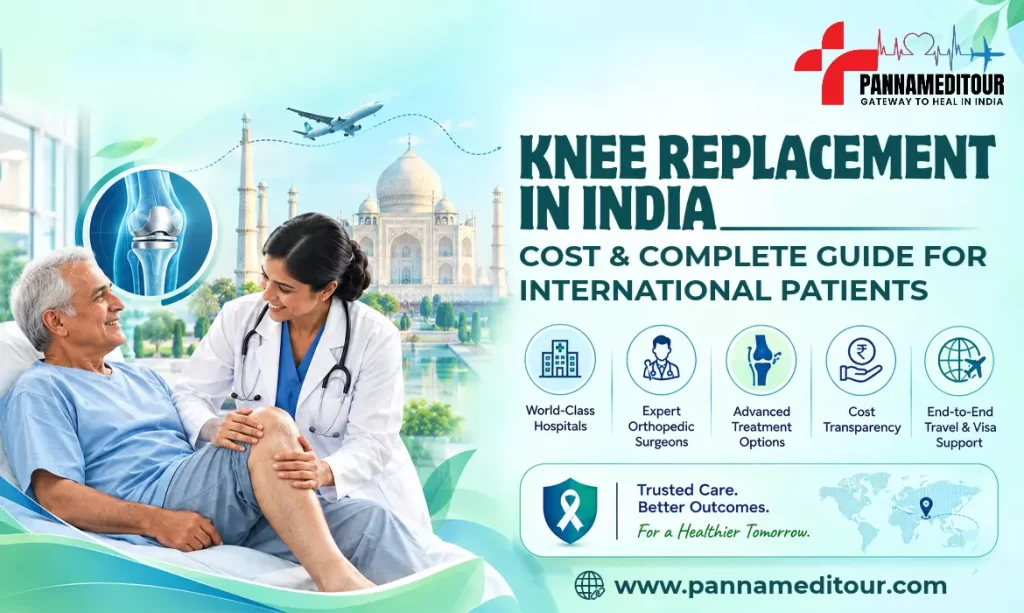
Knee Replacement in India: Cost & Complete Guide for International Patients

Knee replacement surgery is recommended for people with chronic knee pain, arthritis, or serious knee injuries that make walking and daily activities difficult. The procedure replaces a damaged knee joint with an artificial one to reduce pain and improve mobility. Knee replacement in India has become increasingly popular due to advanced medical technology, experienced orthopedic surgeons, modern hospitals, and comparatively affordable treatment costs. With improved surgical techniques and healthcare standards, India offers effective treatment options for lasting pain relief. Total Knee Replacements (TKRs) recorded in the Indian Joint Registry increased from 1,019 in 2006 to 27,000 in 2019, highlighting the growth in knee replacement surgery in India. Choosing the right hospital and planning knee replacement treatment in India can be challenging. Panna MediTour supports international patients at every step, from reviewing medical reports and connecting with orthopedic specialists to coordinating hospital appointments, medical visas, travel, accommodation, and follow-up care. Why Choose Knee Replacement Treatment in India? World-Class Medical Facilities India offers JCI (Joint Commission International) accredited hospitals and NABH (National Accreditation Board for Hospitals & Healthcare Providers) certified facilities with modern technology, robotic surgery, and advanced imaging systems. India performs more than 2.5 lakh knee replacement surgeries every year, and demand for orthopedic care continues to grow According to the 2025 CGHS rates, the cost of unilateral total knee replacement (TKR) is ₹1.52 lakh at a NABH–accredited hospital in a metro/Tier-X city. Source: CGHS – Total Knee Joint Replacement (TKR), Unilateral Experienced Orthopedic Surgeons India is home to experienced orthopedic surgeons specializing in orthopedic surgery and knee replacement procedures including total knee replacement, partial knee replacement, bilateral knee replacement, minimally invasive surgery, and revision knee surgery. Orthopedic specialists use advanced surgical techniques and evidence-based approaches to develop personalized treatment plans based on each patient’s knee condition, mobility needs, and overall health. India also has established clinical practices and expertise in knee arthroplasty, supported by specialist surgeons and professional orthopedic associations. Source: PubMed Central – Current Practice Trends in Knee Arthroplasty in India Growing Need for Knee Osteoarthritis Treatment Knee osteoarthritis is a significant cause of pain and disability in India. A 2025 systematic review and meta-analysis published in the Indian Journal of Orthopaedics estimated the overall prevalence of knee osteoarthritis in India at 20.24%, based on 16 population-based studies. The findings highlight the growing need for timely diagnosis, appropriate treatment, and access to qualified orthopedic care for people affected by knee problems. Source: PubMed – Prevalence of Knee Osteoarthritis in India: A Systematic Review and Meta-Analysis of Population-Based Studies. International Patient Support International patients receive support with doctor consultations, hospital coordination, medical visa assistance, travel, accommodation, follow-up care. Patients can also review the hospital’s patient-safety and accreditation standards before treatment. Knee Replacement Cost in India vs UK and USA Knee replacement cost in India is generally lower than private treatment costs in the UK and USA, making India a consideration for international patients. The overall cost can vary based on the surgery type, hospital, surgeon, implant, technology used, and length of stay. Important Disclaimer The costs shown are approximate private/self-pay estimates and may vary depending on the hospital, surgeon, implant brand, surgical technique, patient’s condition, length of hospital stay, and any additional treatment requirements. UK figures refer to private treatment and do not include NHS-funded care. Final treatment costs should be confirmed directly with the hospital before making treatment or travel arrangements. Step-by-Step Planning for Knee Replacement Surgery in India Planning knee replacement surgery in India involves reviewing medical reports, consulting an experienced orthopedic specialist, understanding treatment options and costs, and preparing for travel and recovery. Panna MediTour supports international patients with medical coordination, hospital selection, consultations, travel and accommodation assistance, and follow-up care, helping patients make informed decisions throughout their treatment journey.   The following steps cover consultation, hospital selection, treatment, recovery, and follow-up care.   Medical Reference: Ministry of Health & Family Welfare, Government of India – Standard Treatment Guidelines: Osteoarthritis of Knee   Step 1 – Share Your Medical Reports for Review Share your medical records, X-rays, MRI scans, blood test reports, and previous treatment details with Panna MediTour for coordination with an appropriate orthopedic specialist. Receive an initial medical review and treatment guidance based on your available reports, helping you understand possible treatment options and the next steps. The orthopedic specialist can assess your condition and determine whether knee replacement surgery may be appropriate based on your symptoms, diagnosis, and previous treatment. Step 2 – Choose Your Hospital and Orthopedic Specialist India has major healthcare hubs such as Delhi NCR, Mumbai, and Chennai, offering experienced orthopedic surgeons, advanced technology, and modern hospital facilities for international patients. Patients can compare and shortlist hospitals and orthopedic specialists with Panna MediTour, based on their treatment needs, surgeon experience, hospital facilities, and available technology. Patients can make informed decisions about knee replacement in India with proper medical guidance. Step 3 – Travel Support Panna MediTour assists international patients with medical visa documentation and travel planning to make their journey to India smoother and more convenient. Step 4 – Pre-Operative Preparation Pre-operative tests are conducted and you meet your surgeon for final evaluation. Step 5 – Surgery and Hospital Stay Knee replacement surgery typically takes around 1–3 hours and may be performed under spinal or general anesthesia depending on the patient’s condition and the surgeon’s recommendation. Hospital stay is usually around 3–5 days, depending on the type of surgery, recovery progress, mobility, and overall health. Step 6 – Post-Operative Rehabilitation Physiotherapy usually begins within 24 hours after surgery, with a surgeon-guided rehabilitation plan to improve knee movement, muscle strength, and mobility. Regular exercises and follow-up care support a smooth recovery and return to daily activities. Step 7 – Follow-Up and Return Travel Before departure, patients receive post-op instructions, medication and follow-up schedules. Panna MediTour supports teleconsultations after you return home for continued care. Types of Knee Replacement Surgery in India Knee replacement surgery is not the same for every patient. The type of procedure depends on the extent of joint damage, the affected

Knee Replacement in India: Cost & Complete Guide for International Patients Read More »

Healthcare
Cancer Treatment in India for International Patients

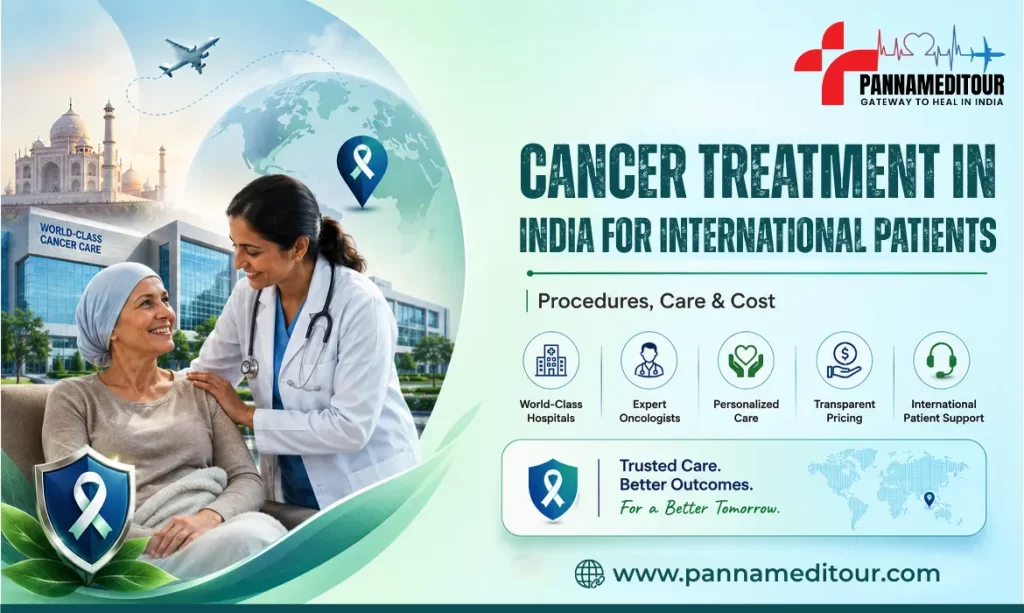
Cancer Treatment in India for International Patients: Procedures, Care & Cost

A cancer diagnosis can feel overwhelming, with difficult treatment decisions ahead. Cancer treatment in India for international patients offers access to advanced therapies, experienced specialists, quality care, timely treatment, and support throughout their healthcare journey. India is now one of the leading destinations for medical tourism, with its medical travel sector recovering strongly. Medical-purpose arrivals increased from around 183,000 in 2020 to more than 644,000 in 2024. This guide explains cancer treatment in India for international patients, including costs, treatment options, visa requirements, hospitals, and support services. From diagnosis and surgery to chemotherapy, radiation, immunotherapy, and targeted therapy, patients can access comprehensive care with guidance throughout their treatment journey. Source: National Cancer Institute Why Do International Patients Choose India for Cancer Treatment? More than 644,000 foreign visitors travelled to India for medical purposes in 2024. Bangladesh, Iraq, Somalia, Oman and Uzbekistan were among the major source countries for medical travellers to India. Cancer treatment is one of the specialised treatments sought by international patients travelling to India. Experienced Oncologists: India has a strong network of more than 4,000 certified oncologists, supporting advanced and specialised cancer care for patients. Advanced Cancer Treatment: Robotic surgery, chemotherapy, radiation therapy, immunotherapy, and targeted therapies. Quality Benchmarks: Many leading hospitals follow international quality standards, including JCI (Joint Commission International) and NABH (National Accreditation Board for Hospitals & Healthcare Providers) accreditation. Affordable Treatment Costs: Cancer treatment can be more cost-effective compared with many other countries. Promising Treatment Outcomes: Cancer survival and treatment outcomes are monitored through the ICMR National Cancer Registry Programme (NCRP), which collects and analyses cancer incidence, mortality, patient care, and survival data. International patients can receive support with hospital coordination, doctor consultations, medical visas, accommodation and travel arrangements. Published BMT Outcomes: Bone marrow and stem cell transplant outcomes from Indian institutions are documented in PubMed-indexed studies, providing published evidence on treatment experience and outcomes. According to IARC’s GLOBOCAN 2022 estimates, India recorded approximately 41 million new cancer cases, 916,827 cancer-related deaths, and 3.26 million people living with a cancer diagnosis within the previous five years. Continued Follow-Up Support: International patients can receive ongoing follow-up care, including tele-consultations with their Indian oncologist, helping them stay connected with their treatment team after returning home. India’s e-Medical Visa facility supports eligible international patients travelling to India for medical treatment. Cancer Treatment Cost in India for International Patients According to WHO cancer data, India carries a significant cancer burden and has access to comprehensive cancer care. Its comparatively lower treatment costs also make it an important destination for international patients. Cancer Treatment Cost Comparison: India vs USA, Thailand Treatment India (USD) USA (USD) Thailand (USD) Cancer Surgery $3,000–$15,000 $40,000–$100,000+ $8,000–$18,000 Robotic Cancer Surgery $4,000–$10,000 $30,000–$80,000 $10,000–$25,000 Chemotherapy $300–$2,000/cycle $3,000–$12,000/cycle $800–$4,000/cycle Radiation Therapy $3,000–$8,000 $30,000–$80,000 $8,000–$15,000 Immunotherapy $1,500–$4,000/cycle $10,000–$30,000/cycle $4,000–$10,000/cycle Bone Marrow Transplant $15,000–$30,000 $200,000–$400,000 $50,000–$80,000 The figures shown are indicative estimates and should be confirmed with the treating hospital. Recommended reading: Important Cancer Statistics and Facts by the CDC Types of Cancer Treatment Available in India Cancer care in India starts with checking medical reports, doing tests, and consulting specialists to plan the right treatment. Advanced Cancer Treatments available in India: SurgerySurgery removes the cancerous tumor or affected tissue from the body. It is often used for solid tumors and may be combined with other treatments. ChemotherapyChemotherapy uses medicines to destroy or slow the growth of cancer cells. It may be given before or after surgery, or as the main treatment. Radiation TherapyRadiation therapy uses high-energy radiation to target and destroy cancer cells. It can be used alone or combined with surgery, chemotherapy, or other treatments. Targeted TherapyTargeted therapy focuses on specific changes or proteins in cancer cells that help them grow. It aims to limit cancer growth while causing less damage to healthy cells. ImmunotherapyImmunotherapy helps the body’s immune system recognize and fight cancer cells. It may be recommended for certain types and stages of cancer. Hormone TherapyHormone therapy blocks or lowers hormones that can help certain cancers grow. It is commonly used for some breast and prostate cancers. Stem Cell or Bone Marrow TransplantStem cell transplantation can help restore healthy blood-forming cells after intensive cancer treatment. It may be used for certain blood cancers such as leukemia and lymphoma. The Cancer Treatment Journey in India with Panna MediTour Travelling abroad for cancer treatment can feel overwhelming. Panna MediTour helps international patients coordinate their hospital, doctor, travel, and accommodation arrangements for a smoother medical journey. Step 1 — Share Medical Reports Share your diagnosis, biopsy reports, scans, and previous treatment records. Our team coordinates with suitable cancer hospitals and specialists. Step 2 — Hospital & Treatment Coordination We help arrange consultations with experienced oncologists and provide information about the recommended treatment and estimated costs. Step 3 — Visa & Travel Support Panna MediTour assists with medical visa documentation, travel planning, accommodation, and local transportation. Step 4 — Consultation & Treatment After arrival, the treating doctor evaluates your condition and recommends suitable treatment, which may include surgery, chemotherapy, radiation, targeted therapy, or immunotherapy. Step 5 — Recovery & Follow Up After treatment, you receive medical reports, discharge documents, medicines, and follow up instructions. Our team can assist with travel and follow up coordination before you return home Conclusion Cancer treatment in India gives international patients access to experienced oncologists, specialized hospitals, modern medical facilities, and advanced treatment options. Panna MediTour helps patients connect with suitable oncology specialists, coordinate hospital appointments, understand treatment plans, and receive guidance throughout their medical journey, from initial consultation and travel planning to treatment, recovery, and follow-up care in India. Looking for Cancer Treatment Options? Talk to Our Experts Today! Medical DisclaimerThis content is for general information only and is not a substitute for professional medical advice. Always consult a qualified oncologist for personalized treatment recommendations. Frequently Asked Questions Is India a good destination for cancer treatment?Yes, India is a good option for cancer treatment, with experienced oncologists, advanced treatments, and NABH–accredited hospitals. How do I arrange a medical visa for cancer

Cancer Treatment in India for International Patients: Procedures, Care & Cost Read More »

Healthcare

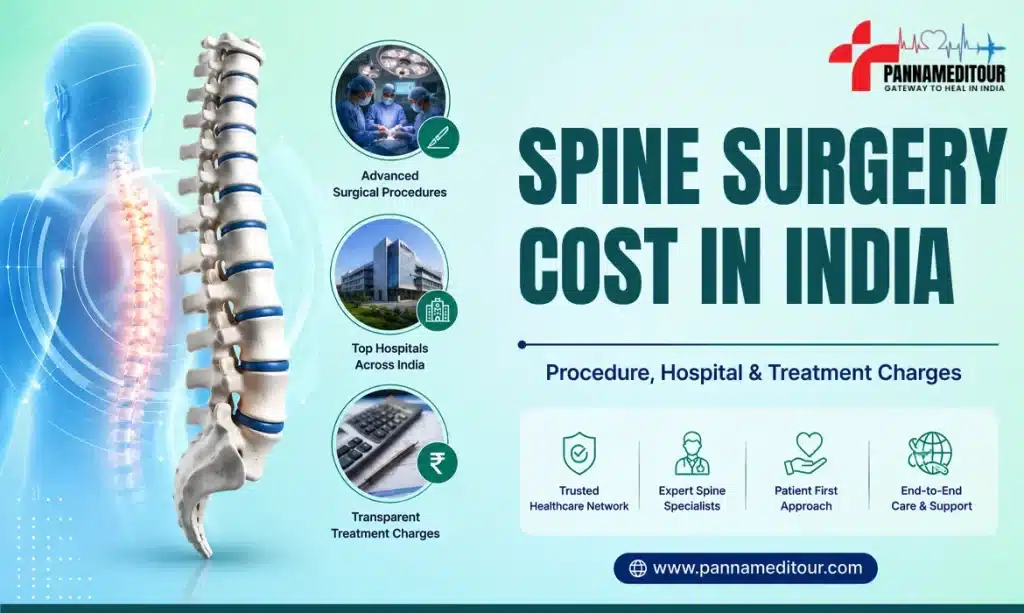
Spine Surgery Cost in India: Procedure, Hospital & Treatment Charges

Spine surgery cost in India depends on factors such as the type of procedure, number of spinal levels treated, hospital, and implants used. The following cost ranges provide a general estimate for treatment at private hospitals.  Compare Spine Surgery Costs Worldwide — Understand Your Treatment Options in India Spine Surgery Type  India (USD)  USA (USD)  UK (Private / USD Eq.)  Discectomy  $1,500 – $4,000  $20,000 – $50,000  $13,000 – $32,000 (£10k–£25k)  Laminectomy  $1,700 – $5,000  $45,000 – $60,000  $38,000 – $45,000 (£30k–£35k)  Foraminotomy  $2,000 – $4,000  $30,000 – $55,000  $20,000 – $35,000  Spinal Fusion  $5,000 – $10,000  $50,000 – $150,000  $25,000 – $50,000 (£20k–£40k)  Artificial Disc Replacement  $3,000 – $7,500  $40,000 – $110,000  $22,000 – $50,000  Minimally Invasive Spine Surgery  $2,400 – $7,500  $35,000 – $90,000  $20,000 – $60,000  Scoliosis  $6,500 – $12,000+  $120,000 – $250,000+  $90,000 – $150,000+ (£70k+)  The prices mentioned above are approximate estimates and may vary depending on the hospital, surgeon’s expertise, procedure complexity, implants, location, and other treatment-related factors. Factors That Affect Spine Surgery Cost in India Spine surgery costs vary based on factors such as the type and complexity of surgery, hospital, surgeon’s expertise, implants, diagnostic tests, and post-surgical care. Why Do International Patients Choose India for Spine Surgery? India is a preferred destination for international patients seeking spine surgery.  Patients benefit from experienced spine specialists and advanced medical facilities.  Modern surgical techniques and medical technology support effective spine care.  Spine surgery costs in India are comparatively affordable and vary by procedure, hospital, surgeon, implants, and patient condition.  Compared with many Western countries, India offers specialized spine care at a lower overall cost.  International patients can receive personalized treatment planning based on their medical needs.  End-to-end medical travel support can include hospital coordination, visa assistance, travel, and accommodation. How to Reduce Spine Surgery Costs in India? You can reduce the spine surgery cost in India without compromising safety by comparing hospitals, treatment options, and expenses in advance. Keep these points in mind:  Choose a NABH-accredited hospital: Tier-2 cities may offer quality spine care at a lower cost than major metros.   Discuss implant options: Ask your surgeon whether suitable Indian-made implants can be used instead of higher-priced imported options.   Check health insurance: Understand waiting periods and coverage for pre-existing conditions before planning surgery.   Compare 2–3 hospitals: Get multiple medical opinions and detailed cost estimates to compare treatment plans and implant costs.   Check employer insurance: Your corporate health insurance may cover eligible spine treatments. Confirm the benefits with your HR team.   Ask about EMI options: Many hospitals provide medical financing or EMI facilities to make treatment costs more manageable.   Plan treatment timing: If surgery is not urgent, discussing suitable dates with the hospital may help with room availability and overall planning.   The goal is not to choose the cheapest treatment, but to find the right balance between cost, hospital quality, surgeon expertise, and patient safety. Why Choose Panna MediTour for Spine Treatment in India? Hospital & Specialist Coordination – Connect with suitable hospitals and experienced specialists.  Doctor Consultation & Treatment Planning – Coordinate consultations and help plan the right treatment approach.  Patient Registration Assistance – Support with hospital registration and required documentation.  Medical Visa Assistance – Guidance with the medical visa process and related requirements.  Travel & Accommodation Support – Assistance with travel arrangements and suitable accommodation.  Healthcare Journey Coordination – Support throughout the medical journey, from initial consultation to treatment and travel arrangements. Conclusion Spine surgery cost in India may range from ₹1.5 lakh to ₹6 lakh or more, depending on the procedure, hospital, surgeon, implants, and patient requirements. International patients should consult a qualified spine specialist before deciding. Panna MediTour assists with hospital coordination, doctor consultation, treatment planning, medical visa, travel, and accommodation support. FAQ’s (Frequently Asked Questions) Q1. What is the average spine surgery cost in India? The cost of spine surgery in India may generally range from around ₹1.5 lakh to ₹6 lakh or more, depending on the type of surgery, hospital, implants, surgeon, and patient condition.  Q2. Is spine surgery covered by insurance? Spine surgery is generally covered by insurance, but coverage details depend on the insurance plan. It’s best to confirm with your provider.  Q3. Is spine surgery cheaper in India than in other countries? India can offer comparatively affordable medical treatment for international patients, but the final cost depends on the procedure, hospital, surgeon, and treatment requirements. Patients should compare complete treatment packages rather than looking only at the surgery fee.  Q4. Does spine surgery cost include implants? It depends on the hospital and treatment package. Some estimates include implants, while others may list them separately. Patients should request a detailed written quotation before treatment.  Q5. How long does recovery take after spine surgery? Recovery varies according to the type of surgery and the patient’s health. Less complex procedures may allow a faster return to routine activities, while spinal fusion and complex procedures may require a longer recovery period and rehabilitation.  Q6. How canPannaMediTour help with spine surgery in India?  Panna MediTour assists international patients with hospital and specialist coordination, doctor consultation, treatment planning, patient registration, medical visa assistance, travel, accommodation, and healthcare journey coordination.  Q7. Can I get a spine surgery cost estimate before traveling to India? Yes. International patients can share their medical reports and treatment history for preliminary coordination. The final treatment plan and cost should be confirmed by the treating hospital and qualified medical specialist after reviewing the patient’s condition

Spine Surgery Cost in India: Procedure, Hospital & Treatment Charges Read More »

Healthcare
Scroll to Top